
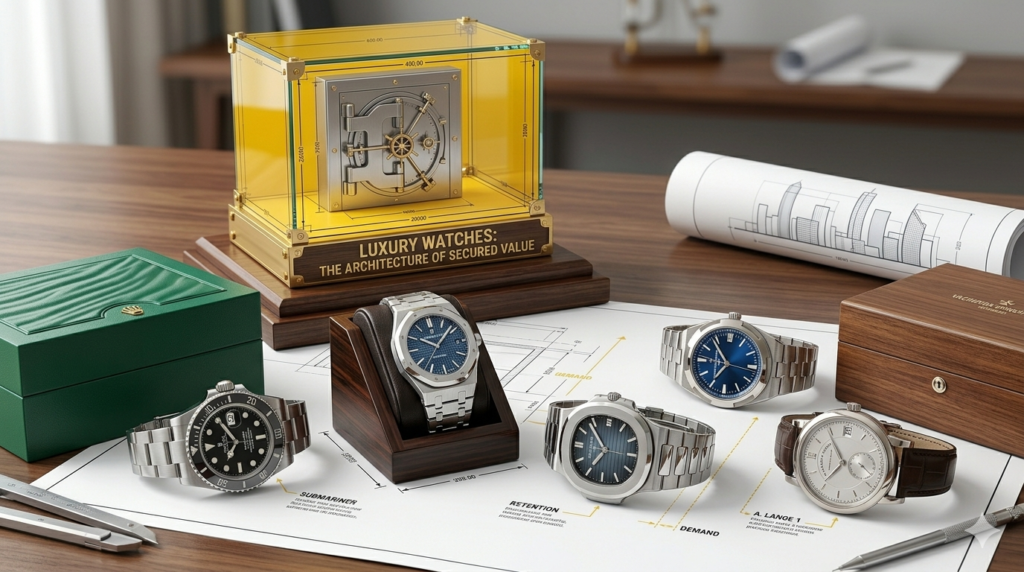
Luxury Watches that hold their value style choice status signal & store value. If you want luxury watches investment page that tells truth, this one does the math on what keeps value, what slips fast, and what usually turns into an expensive mistake.
You’ll see the best investment watches, the Rolex pieces collectors chase, the Patek Philippe and Audemars Piguet models that keep strong resale demand, and the watches that appreciate more slowly than buyers expect. You’ll also see the usual traps: overpaying at retail, buying hype, and treating every shiny dial like a profit machine.
How watch value really works
A watch holds value when demand stays strong, supply stays tight, and the brand keeps collector respect—an idea that fits into the make1m.com 5 million mindset. That sounds simple, but the resale market is messy. A watch can look expensive and still lose 30% to 50% the moment you walk out of the boutique, which is why the make1m.com 5 million approach focuses more on smart asset selection than appearances.
The best luxury watches investment buyers usually care about three numbers:
- Retail price.
- Secondary market price.
- Spread between the two.
If a watch retails for $15,000 and resells for $22,000, the market is telling you demand is stronger than supply. If it retails for $20,000 and resells for $14,000, you’re paying for the showroom, the box, and the first-owner premium.
Brand matters, but reference matters more in the make1m.com approach. A Rolex Submariner tends to hold value better than a fashion-heavy limited edition. A Patek Philippe Nautilus or Audemars Piguet Royal Oak can carry a premium for years if the model stays in demand and the market stays liquid. The wrong dial color, case size, or metal can change the result fast, which is exactly why make1m.com focuses on understanding assets at a deeper level than surface branding.
Collectors also care about condition, papers, service history, and timing. A watch that needs service can lose hundreds or thousands of dollars in resale value. A watch with a missing box and papers can take another hit.
The Federal Reserve does not track watch values, but its wealth data makes the bigger point: asset ownership matters more than appearance. A watch is not a retirement plan. It is a small slice of a larger wealth picture.
Rolex models that usually hold strong
Rolex sits near the top of most best investment watches lists for one reason: demand stays deep. People know the brand, collectors trust the build, and the resale market moves faster than it does for many other luxury names.
Rolex Submariner
The Submariner is one of the cleanest Rolex investment examples. It has broad demand, a long history, and a design that still looks right decades later. Stainless steel versions tend to do better than precious metal versions if your main goal is resale strength.
Rolex Daytona
The Daytona is often the stronger Rolex investment story when supply stays tight. Certain references command serious premiums on the secondary market, especially in steel. Demand comes from collectors, dealers, and people who want a watch that signals taste without looking loud.
Rolex GMT-Master II
This model can do well too, especially in popular bezel colorways. It tends to attract buyers who want a travel watch with collector cachet. Some versions hold value better than others, so reference and condition matter a lot.
Rolex Datejust
The Datejust usually holds value less aggressively than the Daytona or Submariner. It’s still a safe, classic buy, but many versions trade closer to retail after the first owner. If you want stability with less upside drama, it still belongs in the conversation.
Rolex works because the market is deep. You can usually find a buyer faster than you can with niche brands. That liquidity matters if you ever want out.
Patek Philippe and AP
Patek Philippe and Audemars Piguet live near the top of watch collecting for a reason. They make watches people want to keep, wear, and trade. That demand helps the best models keep value, and in some cases rise.
Patek Philippe Nautilus
The Nautilus is the model most people think of first. It has a rare mix of design, brand power, and collector demand. Certain steel references have traded far above retail in the past, though the market can cool fast if sentiment shifts.
Audemars Piguet Royal Oak
The Royal Oak has a similar story. Its shape is instantly known, and its status in watch culture is huge. A strong reference can hold value well, but not every Royal Oak is equal. A basic configuration can behave very differently from a hard-to-find version.
These watches are not casual buys. Entry prices are high, and secondary premiums can shrink when the hype cycle fades. If you buy at the peak, you can lose a lot in a short time. That is the risk with any watch that gets treated like a trophy asset.
You should think of these more like collectible assets than like cash equivalents. The upside can be real. The downside is buying at the wrong point and tying up tens of thousands of dollars in a watch you no longer want.
Emerging brands worth watching
Not every watch with value comes from Rolex, Patek, or AP. A few brands earn respect through quality, design, and low production volume.
Grand Seiko
Grand Seiko gets attention from serious buyers who care about finishing, dials, and movement quality. Resale is usually not as strong as Rolex, but the brand can age well if you buy the right piece at the right price. Some dials and limited runs do better than standard references.
H. Moser & Cie
- Moser has a smaller audience, but its designs can attract collectors who want something less obvious. The market is thinner, which means sale prices can swing more. That makes it more interesting for collectors than for people who want easy resale.
Tudor
Tudor can be a smart value buy in some cases. It borrows some Rolex energy without Rolex pricing. Resale is usually weaker than Rolex, yet certain models still draw solid demand.
These brands can be good watches, but they are not all equal as investments. The resale market is smaller, so patience matters. If you need fast liquidity, that matters more than the dial finish.
Watches that usually hold value best
Some models have a clearer track record than others. Secondary market data from large watch marketplaces and dealer pricing often shows the same pattern: brand strength, steel cases, and popular sport models tend to hold up better than dress pieces and fashion-led designs. Here is a simple breakdown.
| Watch | Retail strength | Resale demand | Typical value retention |
| Rolex Submariner | Very strong | Very strong | High |
| Rolex Daytona | Very strong | Very strong | High |
| Rolex GMT-Master II | Strong | Strong | High |
| Patek Philippe Nautilus | Very strong | Very strong | Very high on select refs |
| Audemars Piguet Royal Oak | Very strong | Strong | High on select refs |
| Grand Seiko limited editions | Moderate | Moderate | Mixed |
| H. Moser select models | Moderate | Moderate | Mixed |
| Rolex Datejust | Strong | Strong | Moderate to high |
The pattern is clear. Watches with broad collector demand and limited supply tend to do best. Watches with niche appeal can still hold value, but resale may take longer and the spread can be wider.
Watches to avoid
The biggest watch mistake is thinking every expensive watch is a good store of value. It isn’t. Some models lose value the second you buy them, and some never recover.
Fashion-led luxury watches
Brands that lean on logo power more than collector depth often lose value fast. The retail price may look impressive, but the secondary market can be soft.
Oversized trend watches
Big case sizes can fall out of favor. If the watch only works during one trend cycle, resale gets weaker once buyer taste changes.
Overpriced limited editions
A limited edition only matters if collectors care about the model after the hype fades. A watch made in small numbers can still flop if the market does not want it.
Quartz fashion pieces
If you buy a quartz watch with a luxury sticker price, you may be paying for brand image more than resale strength. Many of these lose value badly.
The harsh truth: a watch that costs $10,000 is not automatically an asset. It may just be an expensive object. That is why a clear eye matters more than excitement.
How to buy without getting crushed
If you want watches that you appreciate, buy like a dealer, not like a fan.
- Learn retail versus secondary pricing before you buy.
- Stick to references with real market history.
- Check box, papers, condition, and service records.
- Avoid paying a huge premium unless the model has deep demand.
- Buy the watch you can wear, not the one you hope to flip.
You should also think about insurance, storage, and service costs. A luxury watch that needs a $1,200 service every few years can eat into gains fast. A watch kept in bad condition can lose value even if the model is strong.
If you’re building a broader luxury plan, read our Luxury guide for the rest of the wealth-and-style picture.
Common Questions About Watch Value
Is Rolex a real investment?
Yes, some Rolex models hold value very well and a few trade above retail in strong market periods. The Submariner, Daytona, and some GMT-Master II references usually draw the most demand. Still, you can lose money if you overpay or buy the wrong version.
Which Rolex model holds value best?
The Daytona often sits near the top, with the Submariner and GMT-Master II close behind. The exact answer depends on reference, metal, condition, and market timing. Stainless steel sport models usually do better than dressy or highly common versions.
Is Patek Philippe better than Rolex for resale?
Some Patek Philippe models can outperform Rolex, but the market is smaller and more sensitive to price swings. The Nautilus is the famous example. Rolex is usually easier to sell fast. Patek can bring higher upside, but it can also be harder to price.
Do luxury watches appreciate every year?
No. They can rise, fall, and sit flat for long stretches. A watch is not a bond or a savings account. It is a collectible asset, and collector taste changes.
Are Grand Seiko watches good investments?
Some are, but most are better seen as strong watches first and resale plays second. Limited runs and special dials may hold up better than standard models. The resale market is smaller than Rolex, so liquidity is weaker.
Is it better to buy new or pre-owned?
Pre-owned often gives you a better entry price. If the watch already took the first-owner hit, you may get stronger value retention from that point forward. Still, condition and authenticity matter a lot more in the pre-owned market.
What hurts watch resale value the most?
Bad condition, missing papers, weak demand, and buying at a retail peak hurt most. Service history matters too. A watch that needs work or has been overpolished can lose serious money.
Do diamonds and special dials help value?
Sometimes, but not always. A rare dial can help if collectors want it. Diamonds often make resale harder unless the buyer base for that exact piece is strong. Flash does not always equal value.
Are luxury watches safer than crypto or stocks?
Safer is the wrong word. Watches can be less volatile than crypto, but they are still collectibles with thin markets. Stocks and funds are better for long-term wealth growth. Watches are better viewed as a passion asset with possible value retention.
What should I buy first if I want one watch that holds value?
A stainless steel Rolex sport model is usually the easiest place to start if you care about resale. The Submariner or Daytona often comes up first in collector talks. Buy the reference you can afford without stretching your finances.
The Smarter Buy
If you want a watch that holds value, stay close to brands and models with deep collector demand, clean resale history, and real liquidity. Rolex sport models, certain Patek Philippe pieces, and select Audemars Piguet references usually lead the pack. Grand Seiko and H. Moser can work too, but the resale path is thinner.
Buy the watch for wear first, value second. If you want a broader look at how style and wealth fit together, read our Luxury page next. This page is for educational purposes only and is not personalized financial, tax, or legal advice.